Monday, January 26, 2009

Obama priorities: Round two

Not a bad start. In one week, Barack Obama has signed executive orders that are calculated, at long last, to ban torture by the U.S. government, close Guantanamo, and shut down the CIA's secret "black site" prisons around the world. Eric Holder, his nominee for Attorney General, has declared waterboarding to be torture, opening the way to possible (but unlikely) prosecutions of those officials in the Bush administration who authorized or approved its use.

Obama has also acted quickly on environmental issues. As of today, California will be allowed to develop more aggressive pollution-control standards for cars. He has also rescinded the Bush administration's notorious gag order on discussing abortion at overseas birth-control clinics that receive funding from the U.S. government. By freezing a Bush delisting order, Obama has restored the protection of wolves under the Endangered Species Act.

To pursue his economic program, Obama will descend into the ninth circle of political hell by meeting with congressional Republicans tomorrow. Good luck with that, as the Democrats are reduced to courting Maine's two Senators to get the 60 votes they need to stop a filibuster.

So the agenda has moved along nicely in just 168 hours. (Still, you've got to wonder: will the Democrat's economic rescue package go down the tubes in the name of "bipartisanship?")

Now I doubt that the following list would be totally overlooked by the Obama administration, but these are four items also deserve high priority in any effort to reintegrate the U.S. into the global legal framework.

1. Join the International Criminal Court (ICC) in The Hague

The ICC has recruited 108 member nations since it was founded in 2002. The membership includes nearly all countries in western Europe and South America, Japan, Canada, Mexico and Australia. Bill Clinton signed the treaty at the end of his second term, but George W. Bush "ordered the signature withdrawn." By joining the ICC, the U.S. would send a strong message that it has again embraced the rule of law after an eight-year lapse. The Obama administration and current ICC members should strongly encourage China, India and Russia to join.

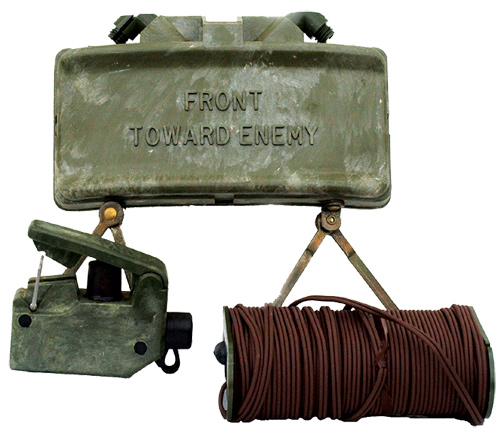
2. Sign the treaty banning antipersonnel mines

The treaty is formally known as the Convention on the Prohibition of the Use, Stockpiling, Production and Transfer of Anti-Personnel Mines and on their Destruction -- or more briefly, the Ottawa Treaty. The treaty was adopted following a vigorous campaign by Jody Williams, a U.S. citizen, that won the early support of the Canadian government. Williams was awarded the Nobel Peace Prize for her efforts. There are 155 signatories to the treaty, including the ones mentioned above. But not the U.S., which claims that the heavily-mined DMZ in Korea should be exempted from its provisions. Meanwhile, South Korea, the supposed beneficiary of U.S. protection, states that it has produced no antipersonnel mines since 2000. Like the U.S., most current manufacturers of antipersonnel mines have refused to sign the Ottawa treaty.

3. Sign the convention banning cluster bombs

After the Convention on Cluster Munitions was approved in Dublin in May of 2008, it was quickly accepted by 107 nations. Last month, 97 of those nations went on to formally endorse the Convention in Oslo. The usual suspects have refused to participate, including the U.S., China, Russia, India and others who either manufacture cluster bombs or have large stockpiles. Unexploded cluster bombs can remain hazardous to civilians for many years.

4. Ratify the Kyoto Protocol on climate change and its successor

The Kyoto agreement is, technically speaking, a Protocol to the U.N Framework Convention on Climate Change (UNFCCC). While the U.S. is a signatory to the Protocol, it has never been ratified by the necessary two-thirds of the Senate. That leaves the U.S. among a handful of countries that have defied international opinion and the overwhelming weight of empirical data on climate change. On their own initiative, an impressive number of U.S. states and cities have adopted many of the Protocol's goals. Over the next couple years, the UNFCCC will be developing a successor to the Kyoto Protocol that will likely include a "cap and trade" system for carbon emissions. While ratification of the Kyoto Protocol might be of little practical importance at this late date, the Obama administration could make up for lost time by playing a major role in developing the next set of goals for stabilizing the climate.

These four steps would require the approval of the U.S. Senate, and therefore the recruitment of a single Republican to overcome a filibuster, not to mention other obstructionist tactics that could (and will) be used. But it's not too early to start the process of gaining approval for these essential treaties.


TOP PHOTO: Barack Obama poses with one of his peers. (Wikimedia)

MIDDLE PHOTO: A U.S. M18A1 claymore antipersonnel mine, ready for deployment. (Wikimedia)

BOTTOM PHOTO: A USAF B-1 bomber dropping 30 CBU's (cluster bombs) (Wikimedia)

Tuesday, January 20, 2009

Inaugural quartet: " Air and Simple Gifts," by John Williams


A powerful performance from today's inauguration by Yo-Yo Ma, Itzhak Perlman, Gabriela Montero and Anthony McGill. The piece incorporates themes from Appalachian Spring by Aaron Copland, one of President Obama's favorite composers.

Inaugural poem: Elizabeth Alexander

Praise song for the day.

Each day we go about our business, walking past each other, catching each others' eyes or not, about to speak or speaking. All about us is noise. All about us is noise and bramble, thorn and din, each one of our ancestors on our tongues. Someone is stitching up a hem, darning a hole in a uniform, patching a tire, repairing the things in need of repair.

Someone is trying to make music somewhere with a pair of wooden spoons on an oil drum with cello, boom box, harmonica, voice.

A woman and her son wait for the bus.

A farmer considers the changing sky; A teacher says, "Take out your pencils. Begin."

We encounter each other in words, words spiny or smooth, whispered or declaimed; words to consider, reconsider.

We cross dirt roads and highways that mark the will of someone and then others who said, "I need to see what's on the other side; I know there's something better down the road."

We need to find a place where we are safe; We walk into that which we cannot yet see.

Say it plain, that many have died for this day. Sing the names of the dead who brought us here, who laid the train tracks, raised the bridges, picked the cotton and the lettuce, built brick by brick the glittering edifices they would then keep clean and work inside of.

Praise song for struggle; praise song for the day. Praise song for every hand-lettered sign; The figuring it out at kitchen tables.

Some live by "Love thy neighbor as thy self."

Others by first do no harm, or take no more than you need.

What if the mightiest word is love, love beyond marital, filial, national. Love that casts a widening pool of light. Love with no need to preempt grievance.

In today's sharp sparkle, this winter air, anything can be made, any sentence begun.

On the brink, on the brim, on the cusp -- praise song for walking forward in that light.

[The transcript of the inaugural poem recited by Elizabeth Alexander, as
provided to the New York Times by CQ transcriptions (January 20, 2009).
]

Monday, January 19, 2009

UPDATE: The Bush challenge

The White House announced today that George W. Bush will not be granting any additional pardons or commutations during the final hours of his presidency. Apparently he has selected Option II of the legal endgame outlined in his counsel's memo, as quoted here on January 17th:
"Grant no pardons, and obtain none yourself, thereby taking the risk that you and other administration officials may be prosecuted for federal crimes allegedly committed during your two terms.

"This 'in-your-face' option will dare the new administration and its Department of Justice to initiate "partisan" and "divisive" prosecutions that, as President-elect Obama has already made clear, he would be very reluctant to pursue."
So, legally speaking, the way is clear for the Obama administration or Congress to call Bush's bluff. To help get things started, here's my partial list of the crimes for which various Bush officials, and Bush himself, must be indicted and prosecuted:
  1. Crimes against peace, including waging a war of aggression, in clear violation of the Nuremberg Principles (see below);
  2. Conspiracy to torture and abuse prisoners and detainees at Guantanamo, Abu Ghraib, Bagram airbase in Kabul and various CIA "black sites" around the world;
  3. Extraordinary rendition of detainees to countries where administration officials knew, or should have known, that they would be tortured;
  4. Illegal wiretaps and other unlawful electronic surveillance of U.S. citizens and others in violation of the 4th Amendment;
  5. Etc., etc.
In a further effort to jumpstart the process, which seems to be stalled at the moment, let me specify the relevant provisions of the Nuremberg Principles:
Principle VI: The crimes hereinafter set out are punishable as crimes under international law:

(a) Crimes against peace:
(i) Planning, preparation, initiation or waging of a war of aggression or a war in violation of international treaties, agreements or assurances;
(ii) Participation in a common plan or conspiracy for the accomplishment of any of the acts mentioned under (i).

(b) War crimes:
Violations of the laws or customs of war include, but are not limited to, murder, ill-treatment or deportation to slave-labour or for any other purpose of civilian population of or in occupied territory, murder or ill-treatment of prisoners of war, of persons on the seas, killing of hostages, plunder of public or private property, wanton destruction of cities, towns, or villages, or devastation not justified by military necessity.

(c) Crimes against humanity:
Murder, extermination, enslavement, deportation and other inhuman acts done against any civilian population, or persecutions on political, racial or religious grounds, when such acts are done or such persecutions are carried on in execution of or in connexion with any crime against peace or any war crime.

Principle VII: Complicity in the commission of a crime against peace, a war crime, or a crime against humanity as set forth in Principle VI is a crime under international law.
The relevant federal laws, including laws related to torture, have already been addressed in previous entries.

So where to begin?

Not with Barack Obama, who has offered the following high opinion of George Bush as a person:
“If you look at my statements throughout the campaign, I always thought he was a good guy,” the Democratic president-elect said on CNN about the Republican president whom he replaces Tuesday.

“I mean, I think personally he is a good man who loves his family and loves his country. And I think he made the best decisions that he could at times under some very difficult circumstances.”

It seems unlikely that Obama would agitate for the prosecution of a "good guy" who made "the best decisions that he could." Obama has also stated:

"I don't believe that anybody is above the law," Obama said in a recent television interview. "On the other hand, I also have a belief that we need to look forward, as opposed to looking backwards."

Obama, a former professor of constitutional law, should know that acting in "good faith" is not a defense to a torture charge.

So that leaves Congress, which on its own could start moving toward the appointment a special prosecutor. Despite the list of war crimes that should be given the highest priority for investigation and prosecution, Nancy Pelosi has a much narrower focus:

...Pelosi said she wants an investigation into whether the Bush administration broke the law when it fired a group of federal prosecutors. [My emphasis.]

"I think that we have to learn from the past, and we cannot let the politicizing of, for example, the Justice Department, go unreviewed," she said. "Past is prologue."

That's it? Considering the gravity of the administration's other offenses, the illegal firing of prosecutors should appear somewhere near the bottom of a very long indictment.

But maybe there's a small glimmer of hope:

House Democrats last week recommended a criminal investigation to determine whether administration officials broke the law in the name of national security. Along with the fired prosecutors, the report cited interrogation of foreign detainees, warrantless wiretaps, retribution against critics and manipulation of intelligence.

Prosecutors ordinarily have a great deal of discretion in determining whom to prosecute, and for what crimes. But Hilzoy of Obsidian Wings and Glenn Greenwald of Salon, among others, argue that crimes like torture are so horrific that prosecution is mandatory under federal and international law. As Hilzoy (Hilary Bok), a law professor at Johns Hopkins, writes:

It seems to me that these facts imply that if Barack Obama, or his administration, believe that there are reasonable grounds to believe that members of the Bush administration have committed torture, then they are legally obligated to investigate; and that if that investigation shows that acts of torture were committed, to submit those cases for prosecution, if the officials who committed or sanctioned those acts are found on US territory. If they are on the territory of some other party to the Convention, then it has that obligation. Under the Convention, as I read it, this is not discretionary. And under the Constitution, obeying the laws, which include treaties, is not discretionary either.

In declining to pardon Cheney, Rumsfeld, Addington and the rest of the cabal, Bush has demonstrated his total confidence that he and his colleages will never be held accountable for their actions. In fact, Bush has only been held to account personally on one occasion: when an Iraqi journalist tossed shoes at him in a Baghdad press conference. (An act that is being repeated, as I write this, by protesters outside the White House.)

Bottom line: Bush walks, as do his co-conspirators.

Amidst all the appropriate jubilation surrounding tomorrow's inauguration, there's every reason to be depressed about the fading commitment of the United States government to the rule of law.

[NOTE: I write this as an enthusiastic supporter of Obama who voted for him and made a small contribution to his campaign. But he and most other Democrats have been seriously wrong on this issue.]

PHOTOS: Scenes from a huge antiwar demonstration (35,000 people) in Portland, Oregon, on March 19, 2006 (M.J. O'Brien).

Saturday, January 17, 2009

EXCLUSIVE: Pardon me, quick...

In a Runes exclusive, a confidential informant has provided us with a copy of a "highly confidential" memorandum to George W. Bush from his personal attorney in the Office of White House Counsel. After reviewing the background of the presidential pardon power, the author presents two options for the administration's legal endgame:
MEMORANDUM OF LAW

January 16, 2009

TO: President George W. Bush
FROM: Wetherby P. Thwaitebottom III
RE: Presidential Pardons

In response to your inquiry during our telephone conversation of January 15th, my research indicates the following:

1. There appear to be no limits of the president's power to pardon under Article II, Section 2, of the Constitution, which provides that the president "shall have power to grant reprieves and pardons for offenses against the United States." As Alexander Hamilton wrote in the Federalist No. 74:
Humanity and good policy conspire to dictate, that the benign prerogative of pardoning should be as little as possible fettered or embarrassed. The criminal code of every country partakes so much of necessary severity, that without an easy access to exceptions in favor of unfortunate guilt, justice would wear a countenance too sanguinary and cruel.

...one man appears to be a more eligible dispenser of the mercy of government, than a body of men.
2. The pardon power applies to all crimes, from actual convictions to cases where no indictment has yet been issued. It does not apply to future crimes, nor does it preclude impeachment.

3. Pardons have been routinely granted since George Washington, on his last day in office, pardoned the leaders of the Whiskey Rebellion of 1794. Other examples include: Gerald Ford's pardon of Richard Nixon in 1974; George H.W. Bush's pardon of 75 people, including Reagan officials who were involved in the Iran-Contra scandal; Bill Clinton's controversial pardon of billionaire Marc Rich and others at the end of his term; and George W. Bush's award of clemency to Scooter Libby.

4. The pardon power applies only to "offenses against the United States" — that is, for crimes defined by federal, and not state, law. By implication, individual states can try and convict, under their own laws, those who are immune from prosecution for federal crimes. Under various state constitutions, governors also have the power to pardon and grant clemency.

Based on the above, I recommend that you consider the following options to insulate yourself and other administration officials from potential liability for war-crimes and other prosecutions after your term ends on January 20th:

OPTION I:

1. At 11:30 p.m. on January 19th, you should grant blanket pardons to all administration officials who may be subject to prosecution, including: Dick Cheney, Donald Rumsfeld, David Addington, Alberto Gonzales, Jay Bybee, John Yoo and anyone else who has been, or may be, implicated.

2. At 11:35 p.m. on January 19th, you should submit your resignation from the presidency, effective immediately.

3. At 11:40 p.m. on January 19th, Dick Cheney should be sworn in as the 44th president of the United States; and,

4. At 11:45 p.m. on January 19th, President Cheney should sign an order pardoning you for any and all crimes that you may have committed during your two terms of office.

While this is legally the most cautious strategy for protecting yourself and your colleagues, there are obvious political and historical risks involved that you are quite capable of assessing. Most notably, wholesale pardons of yourself and others would be widely viewed as an admission of guilt — a concession you may not want to make to your political enemies. Moreover, a self-pardon might be construed as a form of legal masturbation.

Alternately, you could pardon everyone but yourself and assume that the next Attorney General would not be brazen enough to prosecute a former president.

OPTION II:

Grant no pardons, and obtain none yourself, thereby taking the risk that you and other administration officials may be prosecuted for federal crimes allegedly committed during your two terms.

This "in-your-face" option will dare the new administration and its Department of Justice to initiate "partisan" and "divisive" prosecutions that, as President-elect Obama has already made clear, he would be very reluctant to pursue.

Based on the above analysis, I respectfully recommend that you implement Option II.
Will George W. Bush follow these recommendations? We'll find out over the next 72 hours.

NOTES: Our untold thousands of regular readers will recall that the war-crimes question has been a regular topic on Runes. See, for example, here, here, here and here. Always ahead of the curve...

PHOTO: Soulmates — George W. Bush pardons a turkey during the annual ritual, Thanksgiving 2007 (Wikimedia).

Friday, January 16, 2009

Legacy: desecrating the falls

Finally, after years of obstructionism by a single senator (Tom Coburn, R-Okla.), Congress has passed a comprehensive national bill that in Oregon alone will add five new wilderness areas and greatly expand existing areas, including those on Mt. Hood and in the Columbia River Gorge. Even with this bill, the total protected acreage in Oregon is significantly less than in its neighboring states:
Oregon 3.7% in protected wilderness
California 14.0
Washington 11.0
Idaho 7.5
So there's still a lot that remains to be done in Oregon. For example, this state has only one national park (Crater Lake), compared to Washington State's three. Amazingly, not a single national park has been created along Oregon's spectacular coast. While clearcutting has been ravaging privately-owned timberlands across western Oregon in recent years, the BLM has developed, and begun to implement, plans for a massive assault on the state's remaining old-growth forests within its jurisdiction.

In Oregon more than elsewhere on the west coast, there seems to be a lingering premise that forests should be open to clearcutting unless opponents satisfy a heavy burden of proof to the contrary. This premise has a long history. (See here, here, here and here.)

For sixty years, the Angelus Studio in Portland, Oregon, compiled an "extraordinary documentation of the city of Portland, the Lewis & Clark Exposition of 1905, Oregon landmarks, and commercial operations including logging and fish packing." In about 1925, by my estimate, Angelus compiled many photographs of the Columbia River Gorge for the now-defunct Spokane, Portland & Seattle Railway. The one below shows Multnomah Falls, the second-highest waterfall in the continental U.S., not too long after the slopes above it had been clearcut:

In fairness, the land above Multnomah Creek was likely owned by timber baron Simon Benson at the time it was logged. It later became part of the Mt. Hood National Forest.

The existing second- or third-growth forest of even-aged trees above the falls is quite healthy despite modern fires that endangered the historic Multnomah Fall Lodge. The trail to the top of the falls is mobbed year-round, but it's easy to find solitude on the upper trail that leads to the top of Larch Mountain. It's unimaginable that clearcutters could've stripped these steep mountainsides of their trees with impunity, even a century ago.

This legacy may no longer be visible on the slopes above Multnomah Falls, but it lingers in the relationship that many Oregonians still have to their landscape. The central contradiction of land-use planning and development still exists: you can degrade the landscape with clearcutting and urban sprawl but, somehow, still attract the large numbers of tourists needed to nourish local economies. Where the vaunted Urban Growth Boundaries have been established, their effectiveness is undermined by two realities: 1) they can be, and have routinely been, expanded; and, 2) urban sprawl is barely regulated within those boundaries.

A place like Switzerland, of course, is far more dependent on tourism than Oregon. It functions on the opposite premise that a heavy burden must fall on any proponent of altering the pristine alpine landscapes. On my many visits to that country, I've never seen a single clearcut (although mechanized tourism, with its cable cars and skilift towers, has produced blemishes of its own).

The rough Swiss equivalent of Multnomah Falls might be the Staubbach Falls (above) in the Bernese Alps, which at 1,000 feet is twice the height of Oregon's highest waterfall. I seriously doubt that it ever occurred to any Swiss to clearcut the lush conifer forests above the Staubbach.

Logging in the Alps is strictly limited, and clearcutting is forbidden. When logging is done at all, tight restrictions are imposed: for example, horses might be used instead of machinery, and soil compaction can be avoided by removing cut trees in the spring, when the snowpack is still deep.

But I don't think this is merely an economic calculation: the Swiss have a different relationship to the land they've occupied for millennia. It's recognized to be a finite and precious resource, a realization that has been late in coming to Oregon and the rest of the U.S. The latest wilderness bill is an incremental step in the right direction.

Friday, January 02, 2009

Blues Break: Ukulele Orchestra of Great Britain - "Shaft"


The Orchestra performs the theme from Shaft at the Cambridge Folk Festival.

Wishing you peace and happiness in the New Year.

[With a H/T to Obsidian Wings]

Sunday, December 07, 2008

Bush's new digs

Abandoning any pretense of being a brush-clearing "rancher" in Crawford, George Bush will be moving into the posh Dallas suburb of Preston Hollow after his term ends in January. The town, possibly the wealthiest in Texas, has a racial history that's apparently of no concern to the Bush family.

A racially-restrictive covenent in Preston Hollow prohibited nonwhites from using and occupying specified properties until 2000, when it was invalidated. The covenant, adopted in 1956, provided a useful exception:
"Said property shall be used and occupied by white persons except these covenants shall not prevent occupancy by domestic servants of different race or nationality in the employ of a tenant."
Though freestanding "servants quarters" were generously permitted, they had to be placed "to the rear of the lot."

Racial covenents have been legally unenforceable since the Supreme Court's decision in Shelley v. Kraemer (1948), but Preston Hollow's was still on the books just eight years ago. Preston Hollow remains exclusive, however:
one local realtor boasts that the community has an "average household income of about $1.5 million a year."

Preston Hollow's elementary school was also in the news in 2006 after a federal judge found that the school district had attempted to undermine the desegregation decision in
Brown v. Topeka Board of Education (1954) by using discredited "separate but equal" arguments. Not surprisingly, most non-Hispanic white residents of Preston Hollow send their children to private schools.

With little brush to clear, what will ex-president Bush do with all his spare time in Preston Hollow? One clue: the wealthy investor who lives next door has just installed a pond stocked with trout on his 14-acre estate. Much of his time, no doubt, will also be devoted to making speeches for exorbitant fees and raising a half-billion dollars for a presidential "library" at Southern Methodist University. The library's principal function will be to put a positive spin on the worst presidency in modern U.S. history. Meanwhile, good luck with that Bush legacy project, Karl Rove...

PHOTOS: Preston Hollow non-servant housing (top); Bush hosting Angela Merkel at the "Western White House" in Crawford (bottom). (Wikimedia)

[H/T to The Raw Story]

Friday, December 05, 2008

Searching for acorns

Stock intended to eventually earn taxpayers a profit as part of the Bush administration's massive bank bailout has lost a third of its value — about $9 billion — in barely one month, according to an Associated Press analysis. Shares in virtually every bank that received federal money have remained below the prices the government negotiated.
—Associated Press, December 5
This unsurprising report arrived, coincidentally, with similar news (on a somewhat smaller scale) from our latest 401K statement. The reality seems clear enough: markets for exotic financial instruments — especially bundled derivatives traded with minimal disclosure and even less regulation — have become so complex that they're beyond the understanding of those who are trying to set policy and salvage the economy.

The Bush administration is reduced to throwing hundreds of billions of dollars into a black hole in the hope that something will miraculously stimulate a positive response. When the meltdown of mortgage-backed securities began in September, you could easily detect the fear on the faces of congressional leaders, as much as they struggled to project calm to avoid provoking a panic.

Two months later, no one yet seems to have a minimal grasp of what's happening, much less a glimpse of the steps needed to avoid further collapse. The hope seems to be, as an old friend from Nebraska might say: Even a blind hog finds an acorn once in awhile. So far, the hogs are coming up empty.

Saturday, November 29, 2008

Blues Break: Ben E. King - 'Stand by Me'


A vast international collaboration filmed and orchestrated by Playing for Change. Here are the lyrics, written by Ben E. King, with Jerry Leiber and Mike Stoller, in 1961:

When the night has come And the land is dark
And the moon is the only light we'll see
No I won't be afraid, no I won't be afraid
Just as long as you stand, stand by me
And darlin', darlin', stand by me, oh now now stand by me
Stand by me, stand by me
If the sky that we look upon
Should tumble and fall
And the mountains should crumble to the sea
I won't cry, I won't cry, no I won't shed a tear
Just as long as you stand, stand by me
And darlin', darlin', stand by me, oh stand by me
Stand by me, stand by me, stand by me-e, yeah
Whenever you're in trouble won't you stand by me, oh now now stand by me
Oh stand by me, stand by me, stand by me
Darlin', darlin', stand by me-e, stand by me
Oh stand by me, stand by me, stand by me

[H/T Bill Moyers Journal and Laura Doty at Firedoglake]

Wednesday, November 26, 2008

'Taxi to the Dark Side' - See it!


Anyone who has doubts about prosecuting the highest officials of the Bush/Cheney administration for their roles in the torture regime of the last seven years should see this powerful film, which won an Academy Award and a Peabody Award. It should be required viewing for all incoming members of Congress and the new administration, especially Barack Obama and his Justice Department.

Saturday, November 15, 2008

Blues Break: Toumani Diabate - 'Elyne Road'


The legendary Toumani Diabate plays his kora at the 43rd Cambridge Folk Festival in 2007. The song appears as the second track on his latest album, Mandé Variations (2008).

Friday, November 07, 2008

Bush's first (and last) selfless act

“For the next 75 days, all of us must ensure that the next president and his team can hit the ground running,” Mr. Bush said in an emotional speech to hundreds of employees of the executive branch on the South Lawn of the White House. He urged them to “conduct yourselves with the decency and professionalism that you have shown throughout my time in office.”

New York Times, November 6, 2008
No doubt President-elect Obama appreciates Bush's sincerity and generosity in offering full cooperation during the remaining days of his administration.

Bush's understandable concerns about his legacy could be slightly alleviated if he took one further step that would be wildly popular around the world: resign immediately. And take Dick Cheney with him. Under the Presidential Succession Act of 1947, that would leave Nancy Pelosi as regent until Obama and Biden can be sworn in.

Then the adults could take over immediately and begin to grapple with the wasteland that Bush/Cheney will leave as their true legacy.

Wednesday, October 22, 2008

'Unitary executive' theory runs amok


Sarah Palin appearing on KUSA in Denver on October 20, 2008. Replayed on MSNBC's "Morning Joe" on October 22, 2008. Apparently she skipped her high-school civics class on the day that they discussed the constitutional role of the Vice President.

Sunday, October 19, 2008

Party on

For American International Group (AIG) executives, the party goes on even after the corporate meltdown that required a $123 billion (and counting) federal bailout since September. A House committee recently examined the events leading up to, and following, AIG's collapse:
One of the key items discussed was AIG’s spending of no less than $442,000 for a corporate retreat at the St. Regis Monarch Beach resort in Dana Point, California, south of Los Angeles. This original amount was spent on Sept. 22, a week after the Federal Reserve attributed an $85 billion emergency loan to AIG in order to keep the company afloat, avoiding bankruptcy due to insurance liabilities.
This event was hardly unique, as New York Attorney General Andrew Cuomo pointed out in a letter (.jpg) to AIG's Board of Directors dated October 15th:

In the last several months, as AIG was teetering toward bankruptcy, and operating with unreasonably small capital, AIG nevertheless made numerous extraordinary expenditures in the form of executive compensation payments, junkets, and perks for its executives.

For example, in March 2008, ignoring the massive losses AIG was experiencing, the Board awarded its Chief Executive Officer a cash bonus of over $5 million and a golden parachute worth $15 million. Similarly, in February 2008, a top-ranking executive who was largely responsible for AIG's collapse was terminated, but still permitted by the Board to keep $34 million in bonuses. This same individual apparently continued to receive $1 million a month from the company until recently.

Moreover, even after the taxpayer-funded bailout of AIG, the company paid hundreds of thousands of dollars for luxurious retreats for its executives, including an overseas hunting party and a golf outing. We believe these expenditures and payments, made in the absence of fair consideration, violated New York law... which deems such payments to be fraudulent conveyances.

AIG, the world's largest insurance company, has been deemed "too big to fail." The corporate leadership seemed genuinely surprised by all the fuss, though a spokesperson said: "We regret that this event [the retreat at the St. Regis] was not canceled."

The sense of entitlement and heedlessness that AIG's behavior reflects have deep roots in recent economic history. Consider this chart, from the Economic Policy Institute (EPI) in D.C.:

The graph shows the ratios between the incomes of the highest 0.1% of earners (top line), the next highest 1% (second line), and the rest of us (bottom 90%). As EPI notes, the most telling line is the top one:
...when it comes to the wage income of the highest of the high earners, the staggering gap has become a chasm: in 2004 the upper one-tenth of 1% earned 70.4 times as much as the average person in the bottom 90% of the income scale. Just 25 years earlier in 1979, the ratio that was only 21.0-to-1.
During the postwar period from 1947 to Reagan's election in 1980, the ratio was fairly constant — even flattening during the '60's. For the highest earners, though, the party really begins around 1980 despite a nasty recession under Reagan. The red line steepens again during the 90's, only to fall under Bush II with the bursting dot-com bubble.

The EPI concludes: "...in 1979 it took the highest-paid earners 12.4 days to make what most other earners did in a year, but by 2004 that feat was accomplished in a mere 3.7days."

For the top 1% of earners (bottom line in the chart), the news is less dramatic but still very good: in 2006, they earned 20 times as much as the bottom 90% compared to 9.4 times as much in 1979.

Since it focuses only on "earnings," EPI's chart only tells part of the story. A more complete picture would include asset values and other indications of wealth.

John McCain and other Republicans howl reflexively about "class warfare" whenever anyone points out the gross inequalities in the distribution of wealth and incomes in the U.S. Considering the spectacular failure of "trickle-down" economics, and the obvious need to create a more equitable alternative, maybe we need more of it.

It hardly needs to be mentioned that such unequal distributions of income and wealth are a direct function of conscious public policies, notably in the tax codes, that privilege the highest 1% over the rest of the population. It's a form of social Darwinism
— not a law of nature, but a failed system of political and economic organization that needs to be restructured.

Meanwhile, AGI's share price has fallen from about $70 one year ago to $2.10 on October 17th.

[H/T to
UPDATE: A relevant quote

Economist James K. Galbraith, writing in Harper's Magazine (November 2008) on the economic crisis of "casino capitalism:"
The rot comes from predators posing as conservatives and mouthing the rhetoric of “free markets.” They are not actually interested in free markets. Their goal is to use the government to build monopolies, to control resources, to block regulation, to crush unions, to divert as much as possible from taxpayers into private pockets. They have a reckless attitude toward war-making and they put the financial system in peril by failing to enforce standards of ethics and transparency. As a result, they imperil the country’s credit in the world.

Sunday, September 28, 2008

The Palinator meets Katie

Here's an excerpt from the actual CBS interview with Katie Couric in response to a question about using the $700 million bailout to help middle-class families. Note that it's repeated almost verbatim in the above SNL version:
That's why I say I, like every American I'm speaking with, were ill about this position that we have been put in where it is the taxpayers looking to bail out. But ultimately, what the bailout does is help those who are concerned about the health-care reform that is needed to help shore up our economy, helping the—it's got to be all about job creation, too, shoring up our economy and putting it back on the right track. So health-care reform and reducing taxes and reining in spending has got to accompany tax reductions and tax relief for Americans. And trade, we've got to see trade as opportunity, not as a competitive, scary thing. But one in five jobs being created in the trade sector today, we've got to look at that as more opportunity. All those things under the umbrella of job creation. This bailout is a part of that.
Okay, now I get it...

Monday, September 22, 2008

Into the tank = $2.5 billion bonus at Lehman

This is a stunning development, as reported by David Prosser of the London Independent:

Up to 10,000 staff at the New York office of the bankrupt investment bank Lehman Brothers will share a bonus pool set aside for them that is worth $2.5bn (£1.4bn), Barclays Bank, which is buying the business, confirmed last night.

The revelation sparked fury among the workers' former colleagues, Lehman's 5,000 staff based in London, who currently have no idea how long they will go on receiving even their basic salaries, let alone any bonus payments. It also prompted a renewed backlash over the compensation culture in global finance, with critics claiming that many bankers receive pay and rewards that bore no relation to the job they had done.

A spokesman for Barclays said the $2.5bn bonus pool in New York had been set aside before Lehman Brothers filed for chapter 11 bankruptcy in the United States a week ago. Barclays has agreed that the fund should continue to be ring-fenced now it has taken control of Lehman's US business, a deal agreed by American bankruptcy courts over the weekend.

Barclays is paying $1.75bn for the US operation of Lehman and is keen to retain its best staff. It said it had made no promises to individual staff members about how much they will receive but that the bonus fund would be paid out. In addition to the $2.5bn cash pool, Barclays is also in negotiations with about 30 executives it considers to be Lehman's best assets and plans to offer them contracts worth tens of millions of dollars. British employees of Lehman described the bonus payments as a "scandal" as they waited anxiously yesterday to see whether a deal could be struck with buyers circling the bank's European operations.

Many of Lehman's UK staff are particularly angry about the US payouts because it has emerged that in the days running up to the bankruptcy, some $8bn in cash was transferred out of the account of the bank's European business into accounts at the New York head office.

[With a H/T to Digby at Hullabaloo.]

Standing small

In the most recent survey (September 16-19) on Bush's approval ratings, The American Research Group reports:

Overall, 19% of Americans say that they approve of the way George W. Bush is handling his job as president, 76% disapprove, and 5% are undecided.

Among Republicans (33% of adults registered to vote in the survey), 48% approve of the way Bush is handling his job and 46% disapprove. Among Democrats (40% of adults registered to vote in the survey), 3% approve and 95% disapprove of the way Bush is handling his job. Among independents (27% of adults registered to vote in the survey), 8% approve and 87% disapprove of the way Bush is handling his job as president.

Overall, 17% of Americans say that they approve of the way George W. Bush is handling the economy, 78% disapprove, and 5% are undecided. Among registered voters, 18% approve and 78% disapprove of the way Bush is handling the economy.

[...]

Overall, 68% of Americans say they believe that the national economy is in a recession, 28% say they do not believe the economy is in a recession, and 4% are undecided.

With only 8% of independents approving, and Republicans getting the blame for the current crisis by a 2-1 ratio, this can only be bad news for John McCain and Sarah the Impalin.

[With a H/T to Paul Campos at Lawyers, Guns and Money, who notes that Bush's approval rating is "lower than Nixon's the week he resigned."]


Saturday, September 20, 2008

You pays your $700 billion bailout, you takes your pick...

Version #1 - An excerpt from an article [.pdf] by John McCain in the September/October 2008 issue of Contingencies, a journal for actuaries:
Opening up the health insurance market to more vigorous nationwide competition, as we have done over the last decade in banking, would provide more choices of innovative products less burdened by the worst excesses of state-based regulation. [Emphasis added.]
From an interview in the Wall Street Journal (March 2008):
As far as a need for additional regulations are concerned, I think that depends on the legislative agenda and what the Congress does to some degree, but I am a fundamentally a deregulator. I'd like to see a lot of the unnecessary government regulations eliminated, not just a moratorium.
Version #2 - After his recent epiphany, the Wall Street Journal (September 17th) describes McCain's latest position:

"Under my reforms, the American people will be protected by comprehensive regulations that will apply the rules and enforce them to the full," Sen. McCain said in Florida Tuesday. "There will be constant access to the books and accounts of our banks and other financial institutions. By law, it will reduce the debt and risk that any bank can take on. And above all, I promise reforms to prevent the kind of wild speculation that can put our markets at risk, and has already inflicted such enormous damage across our economy."

The sentiment is a far cry from Sen. McCain's antiregulation record. On the stump, he didn't explain how he would distinguish legitimate investment from "wild speculation" or exactly what steps he would take to eliminate the latter.

His campaign announced a new TV ad with the senator saying: "I'll meet this financial crisis head on. Reform Wall Street. New rules for fairness and honesty. I won't tolerate a system that puts you and your family at risk."

Groucho Marx said it best: "Those are my principles, and if you don't like them... well, I have others."

McCain's latest about-face presents yet another variation on the perennial questions of U.S. politics:
  1. Will it play in Peoria? And, related to that,
  2. Is anyone outside the netroots really paying attention to this stuff?
[H/T to dday at Hullabaloo for the Contingencies link.]

Saturday, September 06, 2008

In case you missed it...


Fortunately these shameless performances didn't go completely unnoticed.

BTW, Wassila is hardly the "second largest city in Alaska," as Karl Rove claims. It's roughly one-third to one-quarter the size of Fairbanks (#2) and Juneau (#3). Depending on whose numbers you accept, Wassila is somewhere between 4th and 8th on the list. Question: can a town of 7,025 to 9,236 souls really be described as a "city?"